
Open any kitchen cabinet in America and you’ll find one: the chipped mug nobody drinks from, the dented pot with the wobbly handle, the wooden spoon worn smooth as river glass. Ask the owner why they keep it and watch their face change. “Oh,” they’ll say, softening. “That was my grandmother’s.”
The object is worthless. The object is priceless. That contradiction is one of the most human things about us.
Why a Chipped Mug Beats a New One
Psychologists have a term for this: sentimental value, and it’s far more powerful than economists ever predicted. In study after study, people refuse to sell or discard objects with personal history for sums far beyond the object’s market worth. A watch worth fifty dollars becomes unsellable at five hundred if it was your father’s.
What’s happening in the brain is a kind of magic trick called psychological ownership transfer. The object stops being a thing and starts being a vessel. It holds not just coffee but mornings at a grandmother’s table, the sound of her laugh, the smell of her kitchen. Holding it is, in some small neurological sense, holding her.
This is why decluttering experts struggle with keepsakes: you can’t logic someone out of an object that functions as a memory portal. The mug isn’t clutter — it’s a time machine with a chip in it.
Objects as Anchors in a Disposable World
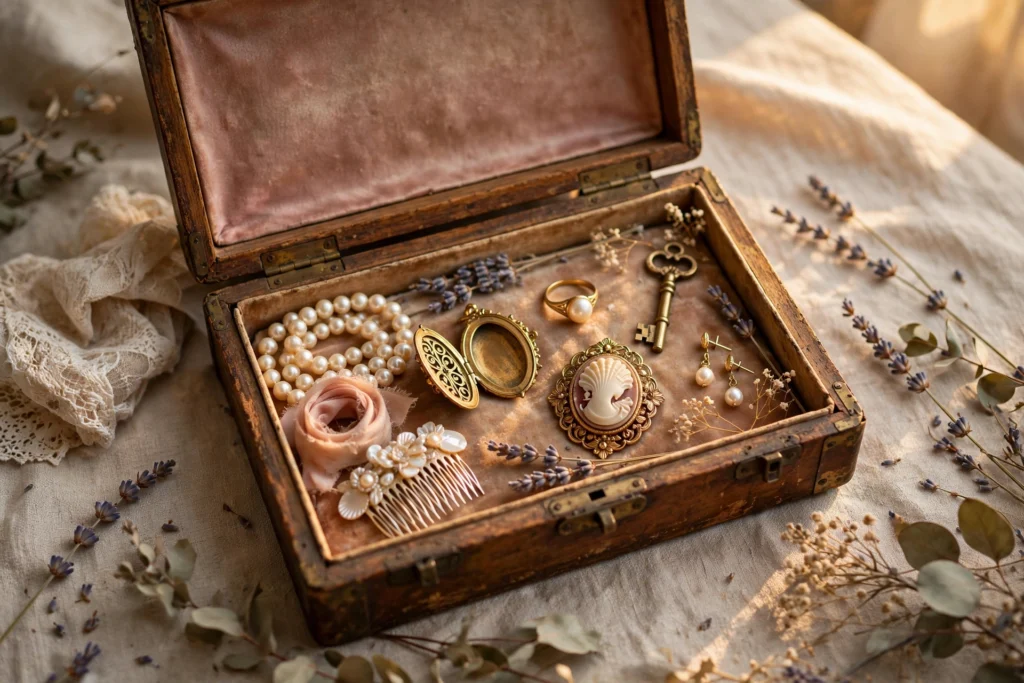
There’s a reason this attachment feels stronger now than it did for our grandparents: we live in the age of the replaceable. Phones last two years. Furniture is flat-packed and temporary. Most of what we own was designed to be upgraded, not inherited.
Against that backdrop, the objects that endure gain almost sacred status. Your grandfather’s hammer — the one with the taped handle and forty years of nicks — carries something no new tool can: proof that things, and people, can last. In a world engineered for disposability, an heirloom is a quiet rebellion. It says: some things are worth keeping. Some things are worth repairing. Some things outlive us on purpose.
Researchers call heirlooms continuity anchors — physical proof you belong to a story longer than your own life. When everything feels transient, the chipped mug says you come from somewhere.
The Science of Touch and Memory
Here’s the part that gets genuinely strange: the power of these objects isn’t just symbolic. It’s sensory.
Neuroscientists have found that touch is deeply wired into memory. The weight of your mother’s mixing bowl in your hands, the texture of your grandfather’s flannel shirt — these sensations activate memory networks more vividly than photographs do. A photo shows you the past. An object lets you hold it.
This is why people in grief often cling to clothing or personal items of the person they’ve lost. It’s not irrational. The brain is doing exactly what it evolved to do: using physical sensation to keep a connection alive. The object becomes a bridge between presence and absence, and crossing that bridge — even for a moment — genuinely soothes.
What to Keep and What to Let Go
So how do you honor this without drowning in stuff? Because the shadow side of sentimental attachment is real: the attic full of boxes nobody opens, the guilt of throwing away anything that belonged to anyone.
Try the story test. Pick up the object and ask: does this carry a specific story, or just a vague obligation? Your grandmother’s chipped mug, the one she drank from every morning while reading the paper — that’s a story. The box of her old Tupperware with no memories attached — that’s obligation wearing a nostalgia costume.
Keep the storytellers; photograph the rest. One shelf of true keepsakes beats a storage unit of guilt. And here’s a beautiful practice: write the story down and keep it with the object. Future generations won’t know why the mug matters unless someone tells them. Be that someone.
The Objects We’ll Leave Behind
One day, something you touch every day without thinking — your favorite pen, the mug you drink from each morning, the blanket on your couch — will be someone else’s chipped treasure. They’ll hold it and feel you in it, the way you feel your grandmother in hers.
That’s the strange power of objects that outlive us. They’re not really about the things at all. They’re about the invisible thread they carry — proof that love, once poured into the ordinary, makes the ordinary indestructible.
Choose your thread-worthy objects well. Use them daily. Let them get chipped.
Practical Takeaways
- Sentimental objects function as memory vessels — your brain treats holding grandma’s mug as briefly holding grandma.
- In a disposable world, heirlooms act as continuity anchors: physical proof you belong to a story longer than your own life.
- Touch is wired directly into memory networks, which is why holding an object recalls the past more vividly than looking at a photo.
- Use the story test when decluttering: keep objects that carry a specific story, photograph and release the ones kept from vague obligation.
- Write the story down and keep it with the keepsake — future generations need someone to tell them why it matters.
- The ordinary things you use daily today are tomorrow’s heirlooms — use them well and let them get chipped.