
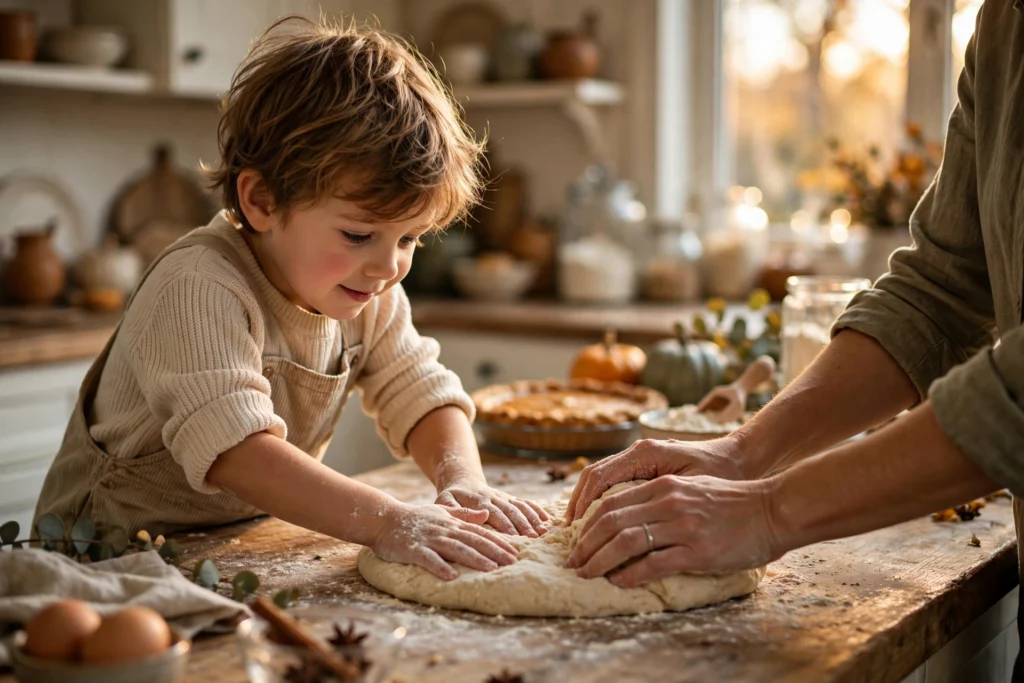
The mashed potatoes were lumpy. The rolls looked like a map of some country nobody could name. The pumpkin pie had a thumbprint in it that nobody would confess to, and the green beans were swimming in what might have been too much butter.
And every single person at that table — all eleven of us — agreed it was the best Thanksgiving dinner we had ever eaten.
I have thought about that meal for years. Because here is the strange part: my aunt is a fantastic cook. She had made a technically perfect Thanksgiving dinner the year before, and nobody talked about it afterward. But the lumpy one? The messy one? The one the kids helped make? We are still talking about it a decade later.
There is a reason for that. And it has almost nothing to do with seasoning.
The Science of “I Made This”
Psychologists have a name for a strange little bias in the human brain: the IKEA effect. In experiments, researchers found that people consistently rate things they built themselves as more valuable than identical things built by someone else. Lab participants who folded their own origami frogs were willing to pay five times more for them than for expert-folded frogs sitting on the same table. Five times. For a paper frog they folded badly.
The effect shows up in kitchens too. In studies of family cooking, children who helped prepare a meal rated the food as tastier — and ate more of it — than children who were served the exact same dishes. It was not the recipe. It was the participation. The moment a child stirs the gravy, their brain files it under “mine,” and “mine” tastes better than “theirs” every single time.
That is why your six-year-old will eat roasted Brussels sprouts she helped toss in olive oil, then reject the same sprouts when they appear at a restaurant. She is not tasting vegetables. She is tasting ownership.
Messy Hands, Sharper Brains
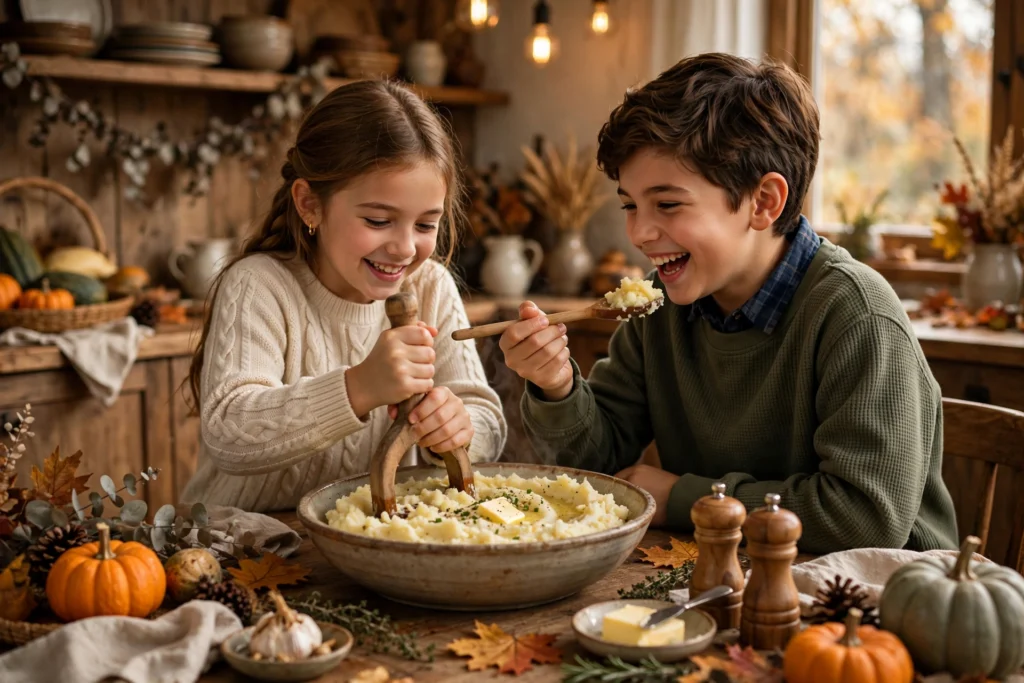
Here is the part parents do not expect: the mess is not a side effect of the lesson. The mess IS the lesson.
Child development researchers have found that sensory play — the squishing, stirring, pouring, and kneading that makes Thanksgiving prep look like a crime scene — builds fine motor skills faster than almost any structured activity. Measuring flour develops early math instincts. Cracking eggs teaches cause and effect. Waiting for the bread to rise is, arguably, the first real lesson a child gets in delayed gratification.
None of that happens when the kids are parked in front of a cartoon while the adults cook. A kitchen is one of the few places in a modern home where chemistry, physics, math, and patience collide in a single afternoon — and it smells like cinnamon while it happens.
The pediatric occupational therapists have a phrase for it: “productive mess.” It looks chaotic. It is doing real work.
The Recipe Is the Ritual
Every family has a Thanksgiving ritual, and most of them are edible. The specific dish almost does not matter. What matters is that it is the same dish, made the same way, year after year, with the same people — and that at some point, the recipe gets handed down.
Anthropologists who study family rituals say something that sounds simple but hits hard: rituals are how families tell children who they are. “In our family, we always make Grandma’s rolls.” That sentence is not about bread. It is an identity statement. And identity is not absorbed by watching. It is absorbed by doing.
The child who is allowed to roll out the pie crust — badly, lopsidedly, with flour in their hair — is not just learning a recipe. They are being inducted. Twenty years from now, when they make that same pie in their own kitchen, they will not be following instructions. They will be rejoining the family.
Nobody ever formed a lifelong bond with a meal they only watched someone else make.
What Kids Actually Remember
Ask adults about their favorite childhood holiday memories. Almost nobody says “the year the turkey was perfectly brined.” They say things like: “I got to baste the turkey and my uncle pretended I was the head chef.” “My sister and I fought over who got to lick the beaters.” “My grandfather let me carve the first slice and it was terrible and everyone cheered.”
The pattern is unmistakable. Nobody remembers the food. Everybody remembers the feeling. And the feeling is always the same: I was part of it. I mattered here.
Which means the lumpy mashed potatoes are not a failure of the meal. They are the point of it. The meal is not really the meal. The meal is the making.
Practical Takeaways
- The “IKEA effect” is real in the kitchen: kids rate food they helped make as tastier and eat more of it — ownership changes the flavor.
- Assign one real, age-appropriate job per child (washing vegetables, mashing potatoes, buttering rolls) and protect it like a sacred duty — “helping” works best when it is genuinely needed, not fake.
- Embrace the productive mess: sensory cooking play builds fine motor skills, early math instincts, and patience faster than most structured activities.
- Turn one dish into a repeatable family ritual — “our rolls,” “our pie” — because rituals made by hand become identity, and identity is learned by doing, not watching.
- Lower the bar on purpose: the goal is not a perfect dinner, it is a dinner the kids will still be talking about in twenty years. Lumpy is a feature, not a bug.
- Take the photo of the flour-covered chaos. That is the one you will frame.