
Walk into a used bookstore and take one deep breath. Go on, really breathe it in. That warm, sweet, slightly vanilla scent with a whisper of dust — it doesn’t just smell nice. It feels like being wrapped in a blanket your grandmother knitted. Like rainy Sunday afternoons. Like being eight years old and discovering that stories could swallow whole weekends.
You’re not imagining it. There’s real science behind why old books smell like comfort, and why that smell hits harder than any candle labeled “Vintage Library” ever could.
What’s Actually in That Smell
That beloved aroma is chemistry, not magic. Old books are made of paper, glue, and ink — and all three slowly break down over the decades.
Paper contains cellulose and lignin (especially books printed before the 1980s, when acidic paper was standard). As lignin decomposes, it releases volatile organic compounds — including vanillin, the same molecule that gives vanilla its scent. That’s why old books smell faintly sweet and warm. Add benzaldehyde (a hint of almond) and ethyl hexanol (softly floral), and you’ve got a fragrance that no perfumer could quite engineer on purpose.
Different eras smell different, too. A book from the 1920s smells different from one printed in 1975, because paper manufacturing, binding glue, and ink formulas all changed over time. You can practically date a book by its perfume.
The Nostalgia Bomb in Your Brain
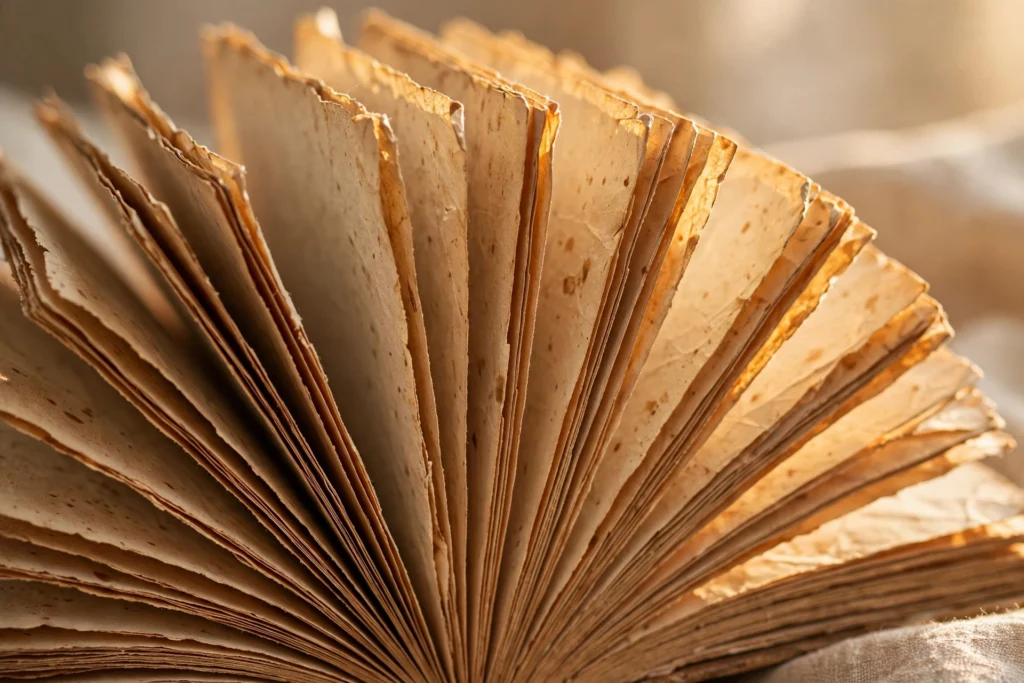
Here’s the wild part: your sense of smell has a direct line to your brain’s memory and emotion centers. While your other senses take the scenic route, scent zips straight to the amygdala (emotions) and hippocampus (memory). Scientists call it the Proust effect, after Marcel Proust, who wrote an entire novel inspired by a bite of cake.
So when you smell an old book, your brain doesn’t just register “musty paper.” It replays the feeling of the last time you smelled it — maybe your school library, your grandfather’s study, a childhood bedroom where you read under the covers with a flashlight. The smell arrives as a time machine, and the emotion shows up before the thought does. That’s why it feels like a hug: your body remembers being safe and absorbed and happy, and the scent presses play on that memory.
Why New Books Don’t Hit the Same
New books smell great — that crisp, inky, just-printed scent is its own joy. But it’s a different joy. New-book smell says possibility: an unread adventure, a fresh start. Old-book smell says belonging: this story has been loved before you, read by hands you’ll never meet, and it survived to reach yours.
There’s a quiet romance in holding a novel that someone read on a train in 1963. The smell is proof of its journey. It’s been somewhere. It’s seen things. And now it’s in your hands.
The Vanishing Scent
There’s a bittersweet footnote to all this. As e-books and print-on-demand have grown, fewer books are being printed on the old lignin-rich paper that produces that gorgeous aging aroma. Modern acid-free paper is designed to last longer without degrading — which is great for preservation, but means future generations may never know the exact scent we love so much.
Libraries and archivists are aware of this. Some are literally cataloging the smells of old books — a field nicknamed “historic odor preservation” — so the scent of a 16th-century manuscript or a beloved childhood edition can be documented even after the chemistry fades.
Recreating the Magic at Home
You can’t speed up a book’s aging (and please don’t try), but you can surround yourself with the feeling. Visit used bookstores just to browse and breathe. Rescue one old paperback from a thrift shop — it costs less than a coffee and smells infinitely better. Keep a small shelf of old books near your reading chair, and let their quiet vanilla-dust perfume drift over your modern reads.
Better yet: read one. Old books weren’t meant to be decoration. They were meant to be opened, cracked, lived in. The smell is just the invitation.
Practical Takeaways
- Visit a used bookstore on purpose. Give yourself ten minutes to wander and breathe — it’s free aromatherapy with a plot.
- Rescue old books from thrift stores. They’re cheap, they’re beautiful, and every one carries its own era’s scent.
- Notice what memories surface. The next time a book’s smell hits you, pause and notice the memory — then write it down. You’ll thank yourself later.
- Gift an old book, not a new one. A vintage edition with a handwritten note inside is the most sentimental present there is.
- Keep physical books on your shelf. E-books can’t age, and they can’t hug you back.