
There’s a particular joy known only to people who grow things: the morning you walk into the kitchen and notice the basil has sprouted two new leaves overnight. Nobody else would care. You stare at it like it just got accepted to college.
It sounds silly. It’s neuroscience: your brain is wired to find deep satisfaction in watching living things grow.
The Ancient Reward Circuit
For most of human history, noticing growth wasn’t a hobby. It was survival. The ancestors who paid close attention to which plants were thriving — and which were about to bear fruit — ate. The ones who didn’t, didn’t. So evolution built a reward system around it: tending living things and watching them flourish triggers the same satisfaction circuits as other fundamental wins.
Modern life stripped most of us of that feedback. Work projects take quarters to mature; the inbox refills faster than you can empty it. Very little gives you the simple, visible proof of I did a thing and it worked.
A plant does. You water it, give it light, and it responds — visibly, in green. It’s one of the last remaining places in modern life where effort and result are directly, beautifully connected. No wonder it feels so good.
The Calm of Tending
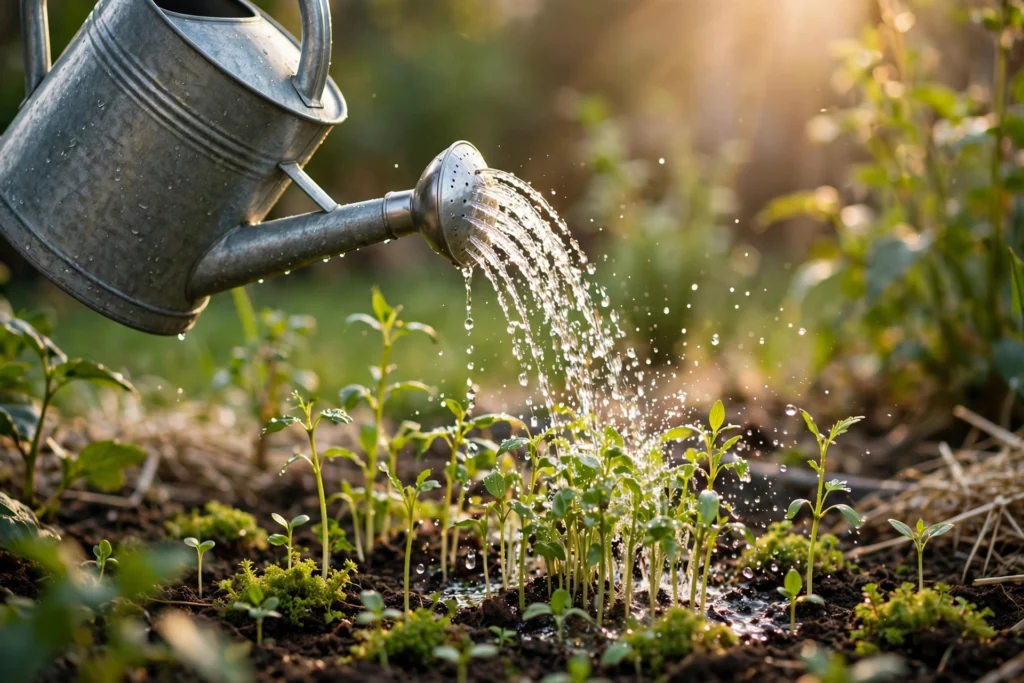
But the joy isn’t just in the growth. It’s in the tending — the daily ritual of checking soil, turning leaves toward light, snipping the dead bits. Gardeners describe this state in words that sound a lot like meditation: time slows down, the mental chatter quiets, attention narrows to something simple and alive.
Psychologists call this absorbed, low-stakes focus soft fascination. Unlike work’s hard focus — deadlines, decisions, performance — it holds your attention gently, demanding nothing. It’s the campfire-watching state, restoring what hard focus depletes.
This is why even five minutes with your houseplants can feel like a reset button. You’re not being productive. You’re not optimizing. You’re just tending — and your nervous system reads that as safety.
Beginner Wins: Start Embarrassingly Small
If you’ve killed a plant and sworn off the enterprise, you started too big. The secret of indoor-jungle people isn’t a green thumb — it’s starting with plants that practically grow themselves.
- Herbs on the windowsill. Basil, mint, chives. They grow fast, they forgive mistakes, and you get to eat the evidence of your success. Nothing builds confidence like pesto you grew yourself.
- Succulents and pothos. The cockroaches of the plant world, meant lovingly — they survive neglect, low light, and irregular watering. Perfect for the recovering plant-killer.
- One tomato plant. If you have even a small balcony or sunny patch, a single cherry tomato plant will teach you more about patience and reward than any self-help book. The first red tomato is a life event.
The rule: start with something almost impossible to kill, succeed, and let the success make you curious about the next thing. Confidence in gardening — like everything — is built from evidence, not pep talks.
The Garden as Daily Ritual
Here’s where it gets profound. The people who stick with growing things rarely talk about the harvest. They talk about the routine. The morning walk to check on things. The evening watering. The way the garden gives the day a shape — a beginning and an end marked by something alive.
In a life of infinite scroll and formless weekends, that shape matters more than we admit. A garden imposes a gentle rhythm: things need you at certain times, in certain ways, and they reward the showing up. It’s responsibility without pressure. Commitment without a performance review.
Therapists who work with anxiety and depression have started noticing what gardeners always knew: that this kind of rhythmic, living routine anchors people. On the worst days, the plants still need water. And somehow, getting up to water them becomes the first small proof that you can still show up — for them, and then for yourself.
Growth Is Contagious
One more effect, and it’s the loveliest: growers start noticing growth everywhere. The neighbor’s roses. The weed pushing through the sidewalk crack — suddenly not a weed but a tiny miracle of persistence. The way their kid learned to read, the way a friendship deepened.
Attention is a spotlight, and gardening trains it on aliveness. Once your brain learns to delight in a new leaf, it starts finding new leaves everywhere — in projects, in people, in yourself. The basil on the windowsill was never just basil. It was practice in noticing that things get better when you tend them.
Including you.
Practical Takeaways
- Your brain rewards tending living things because for most of human history, noticing growth meant survival — plants give you rare, visible proof that effort works.
- The daily ritual of plant care creates soft fascination, a gentle focus state that restores the mental energy depleted by hard work focus.
- Start embarrassingly small: windowsill herbs, pothos, or one tomato plant — early wins build the confidence that sustains the habit.
- A garden gives your day a living rhythm — a gentle routine of showing up that anchors you, especially on hard days.
- Gardening trains your attention on aliveness, and that spotlight starts finding growth everywhere: in people, projects, and yourself.
- You don’t need a yard or a green thumb — a sunny windowsill and one forgiving plant is enough to begin.