
Nobody sits down and plans to throw money in the trash. But most families do it every week — a bag of wilted spinach here, a duplicate jar of pasta sauce there, one “emergency” pizza that wasn’t actually an emergency. Here’s the good news: you don’t need a coupon binder, a spreadsheet, or a new personality. These nine tiny habits take seconds to minutes, and together they save the average family well over $1,000 a year.
1. Do a Pantry Scan Before Every Grocery Trip (~$200/year)
Before you write your list, open the pantry, fridge, and freezer and just look. So many duplicate purchases happen because someone bought black beans without realizing there were already three cans hiding behind the cereal. Snap a quick photo of your fridge and pantry with your phone — it takes thirty seconds and ends the “wait, do we have garlic?” text chains forever. Skipping even one or two duplicate purchases a week saves around $200 a year.
2. Plan Dinners Around What You Already Have (~$250/year)
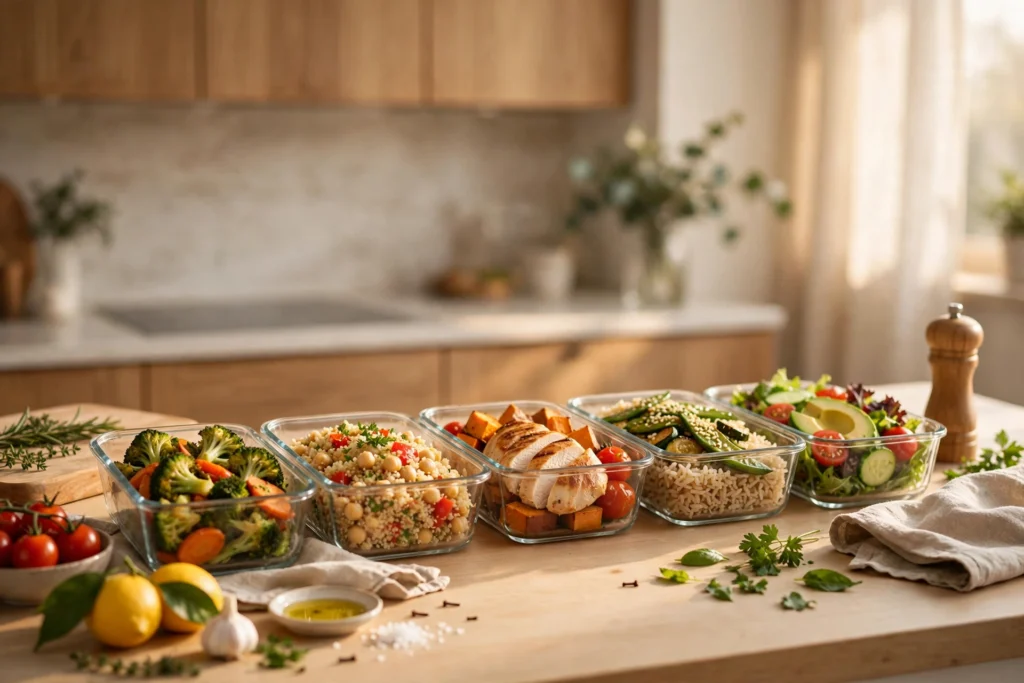
Most people plan meals first, then buy ingredients. Flip it: pick the three ingredients closest to going bad — that half cabbage, the chicken thighs, the sour cream — and build dinners around them. Cooking from your inventory first means less food dies in the crisper and fewer last-minute store runs. One planned-from-the-fridge week easily saves $20 a month in wasted food and impulse buys. That’s $250 a year, without cooking anything fancy.
3. Declare a Weekly “Use-It-Up” Night (~$150/year)
Pick one night a week — Friday works for most people — where dinner is made only from leftovers and odds and ends. Grain bowls, fried rice, quesadillas, and “clean-out-the-fridge” pasta all turn stragglers into something you’d actually want to eat. Rescuing just one $3 bag of would-be-wasted food each week adds up to $150 a year.
4. Freeze Your Bread and Your Cheese (~$100/year)
Half a loaf of bread goes stale. Half a block of cheese grows something fuzzy. Slice bread before freezing and you can pop single pieces straight into the toaster. Grate cheese into bags and freeze it flat — it melts perfectly into pasta and casseroles. Together, families routinely toss $100+ of bread and dairy a year. A couple of freezer bags fix it permanently.
5. Store Produce Like It Matters — Because It Does (~$80/year)
Fruits and vegetables are the most wasted food category, and most of it is a storage problem. Berries last days longer on a paper towel in a ventilated container. Lettuce wrapped in a dry towel stays crisp instead of melting. Herbs stand upright in a jar of water like a tiny bouquet. These are 30-second moves that easily save $80 a year in produce you’d otherwise toss.
6. Cook One Big Batch Meal a Week (~$150/year)
One pot of chili, soup, or curry on Sunday is four dinners you don’t have to think about. Batch cooking cuts the “I’m too tired, let’s just order something” nights — the single most expensive kitchen habit there is. Skip just one $30 takeout order a month thanks to having food ready, and you’ve saved $360. Even the modest version — one batch meal a week — comfortably saves $150 a year.
7. Put a Lid on It (~$70/year)
This one is almost silly. Cooking with a lid on cuts energy use dramatically — water boils faster, simmering needs less heat. Over a year of daily cooking, combined with matching pot size to burner size, it trims your energy bill by about $70 a year for habits that cost you nothing.
8. Shop the Sale Flyer, Not Your Cravings (~$100/year)
Grocery shopping by craving is a budget leak. Instead, glance at the weekly sales before you go and build at least two meals around whatever protein and produce are discounted. This isn’t extreme couponing — it’s just letting the store’s deals do your menu planning. Swapping in sale-priced chicken instead of full-price beef a few times a month saves $100 a year, easily.
9. Run a Monthly “Eat the Freezer” Week (~$100/year)
Once a month, challenge yourself to eat mostly from the freezer and pantry for a few days. You’ll rediscover the bag of meatballs, the frozen peas, and that stew you made three months ago — before they become frosty mysteries you eventually throw away. Fewer groceries bought that week plus less food wasted adds up to roughly $100 a year.
Practical Takeaways
- Snap a photo of your fridge and pantry before every grocery trip to kill duplicate purchases.
- Build dinners around ingredients that are about to go bad, not around new recipes.
- Make one night a week a “use-it-up” night for leftovers and odds and ends.
- Slice and freeze bread, grate and freeze cheese — both reheat perfectly.
- Store produce properly (paper towels, jars of water, dry towels) to make it last days longer.
- Batch-cook one big meal a week so tired evenings don’t become takeout evenings.
- Keep lids on pots, match pots to burner sizes, and shop the weekly sales — small moves, real savings.